
The Combat Between Carnival and Lent, Italian Style
Adam's Notes for March 5, 2026

About Me | Instagram | Goodreads | Letterboxd
Hey folks, only a very short post today.
I was researching something earlier this week and came upon this description of Carnival/Lent celebrations in northern Italy and thought you’d enjoy:
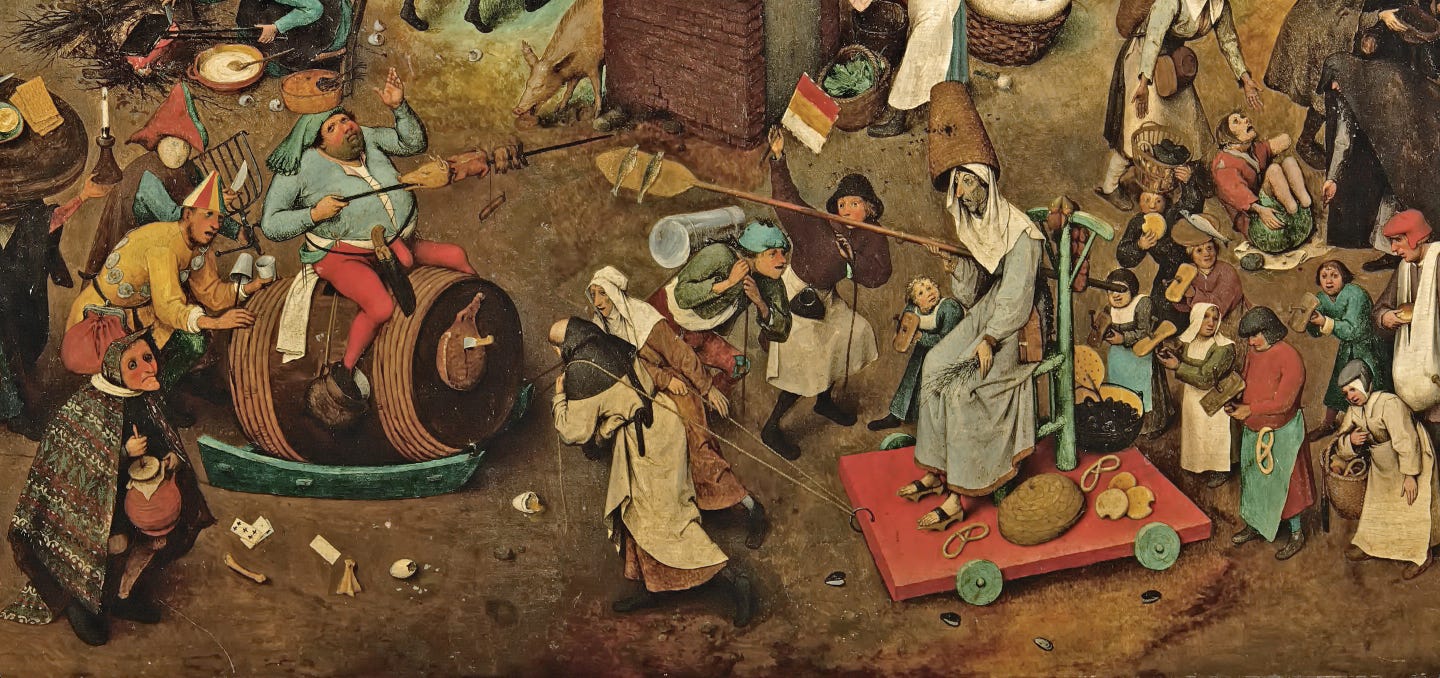
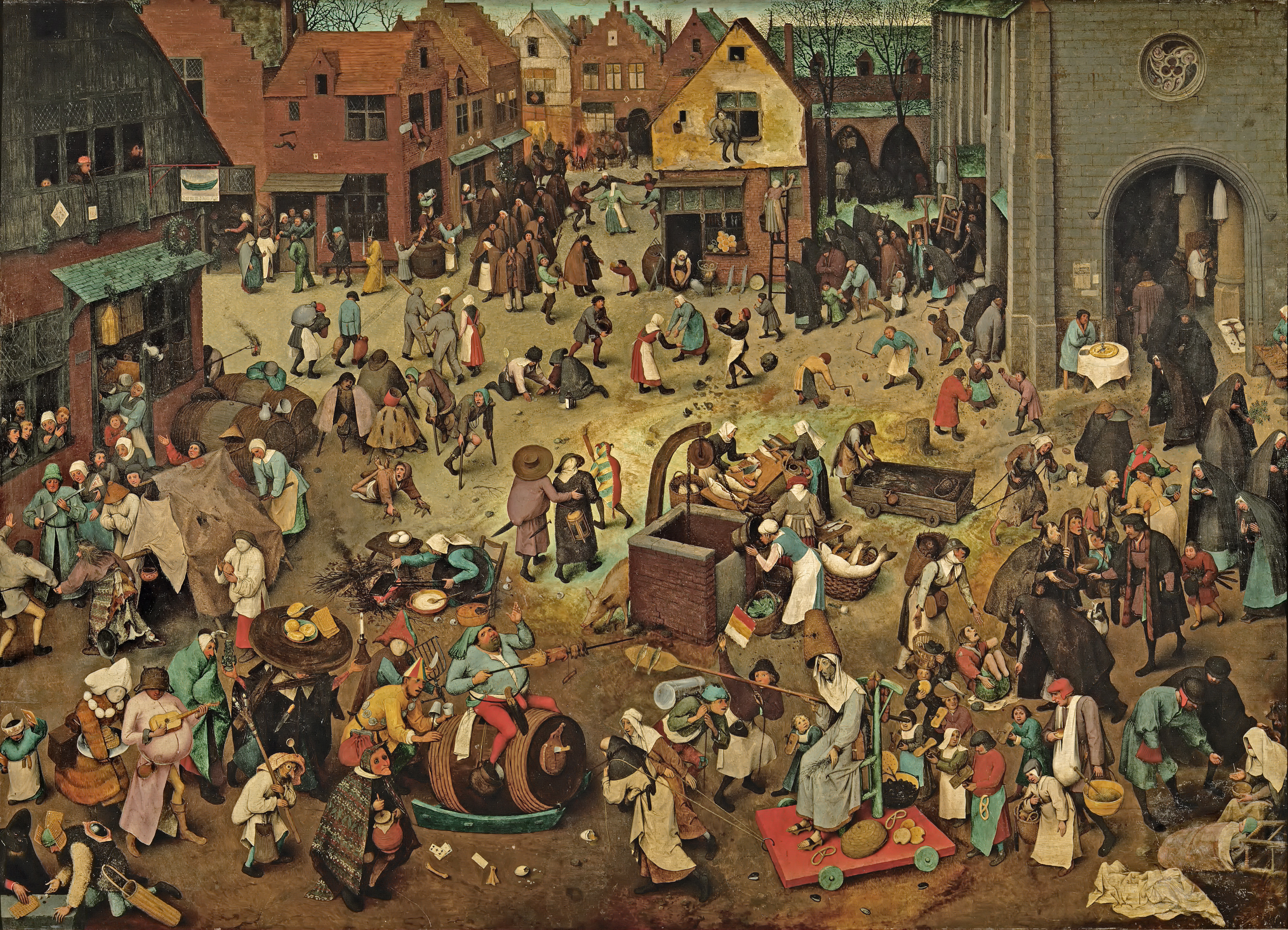
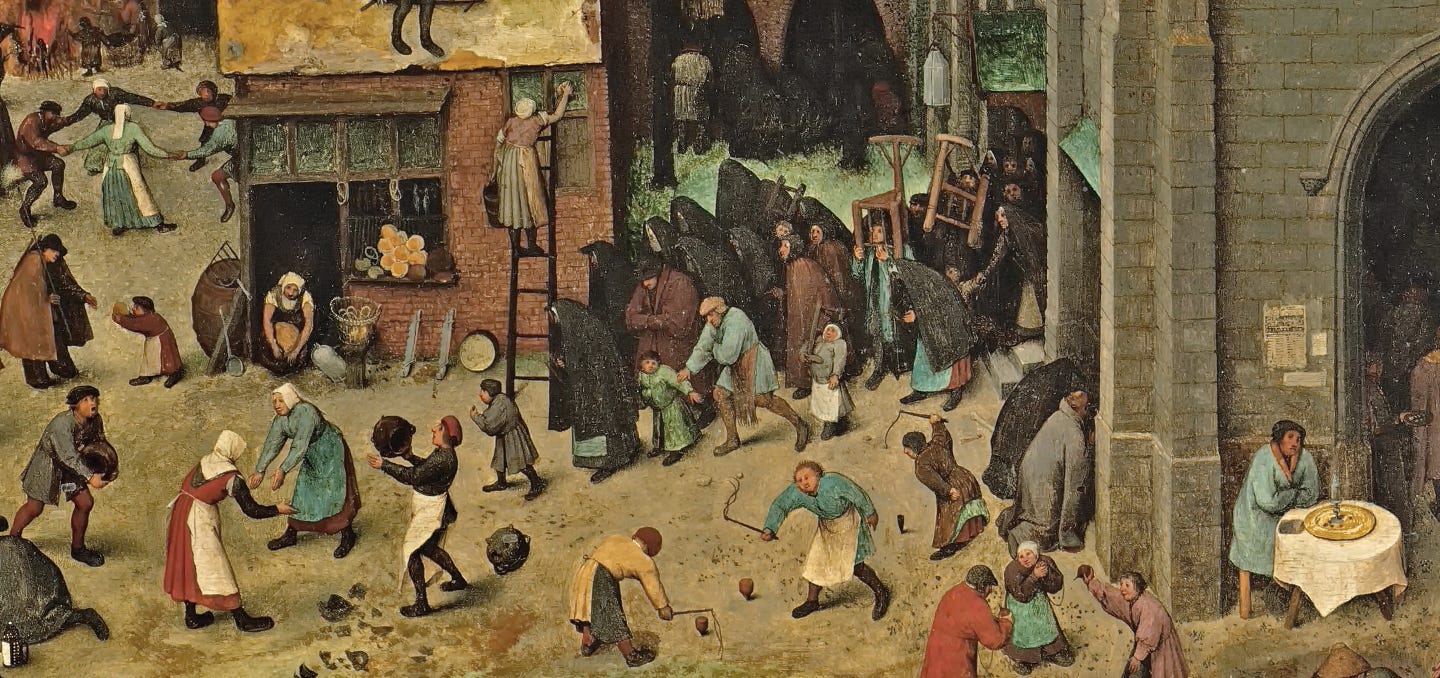
For the present, we shall leave our discussion of Ferrarese tournaments until the final chapter, subject to one small but interesting point concerning the structural opposition of Carnival and Lent. Historians have long familiarized themselves with this opposition through the iconographic battles depicted by Bosch and Brueghel, of which Brueghel's magnificent Combat of Carnival and Lent has attracted special commentary. A fat man, capped by a pie and sitting astride a wine barrel, jousts with a haggard old woman seated on an upright chair: he (Carnival) is armed with a skewer for meat, she (Lent) with a baker’s pallet. Within the context of contemporary Shrovetide festivities, the literal meaning of the scene is plain enough, although the wider implications of the painting have meant an iconographic commemoration of the Christological cycle running between Christmas and Whitsun to Claude Gaignebet, and to Peter Burke, a representation of the attempt by clergy Catholic and Protestant to suppress or reform popular festivities at the time of the painting’s composition (1559). There is some evidence which suggests that Brueghel's combat drew inspiration from publicly enacted rituals. In Venice, for example, a pig was beheaded every year on Shrove Tuesday, in Madrid, alternatively, a herring was buried with ceremonial honours. Here is Peter Burke's synthesis of the closing stages of a "model" Carnival celebration: "The last act of the festival was often a drama in which 'Carnival' suffered a mock trial, made a mock confession and a mock testament, and was given a mock execution, usually by burning, and a mock funeral". In Bologna, during the Carnival of 1506, the jousting theme found vivid expression. A tournament was held in the piazza between "Carnival" mounted on an obese horse, and "Lent", mounted on an emaciated one, both figures commanding a squadron of knights. Equally poignant to the spectators must have been the Ferrarese tournament held on 4 February 1502 as an intermezzo during the performance of the Bacchides. A young girl, in the company of ten nude young men, is assailed by a Lenten dragon "ando per devorarla", but she is saved by a knight who upon defeating the monster, ‘Itlo prese, et, menandolo ligato, la giovene a brazo con un giovene lo seguitavalt.’ Following this, a young man, naked except for a pair of shoes which are worn upon his head, is scourged by ten boys dressed in white … the shoes are captured by the company and placed upon a horse to be carried in procession about the theatre (in the Palazzo della Ragione). For the time being, the rigours of the Lenten fast are postponed. Surely more significant, however, was the annual tournament held in the Piazza on Shrove Tuesday, the Spettacolo'del Porco. As Prosperi described the proceedings to Isabella d’Este, a tribunal was erected upon which a pig was loosed. Twelve familiars of the ducal household armed with clubs (bastoni) and protected by helmets and breast-plates, were blindfolded and led onto the stage. "Dato il segnale a suon di trombell,” the men moved forward to give combat, the object being-to club the animal to death and make off with the prize.
Source: THE POLITICS OF MAGNIFICENCE IN FERRARA 1450-1505: A Study in the Socio-Political Implications of Renaissance Spectacle by Richard Gordon Brown
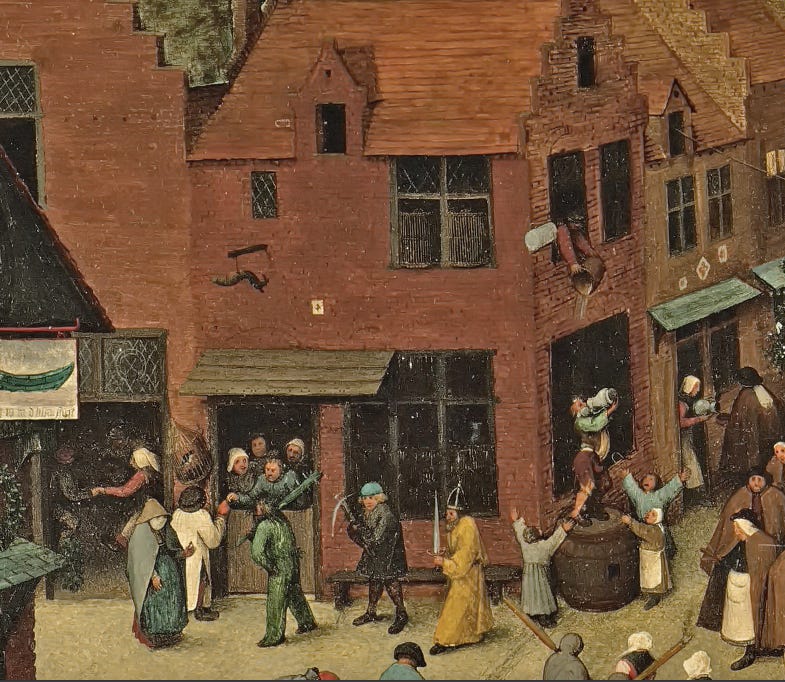
I once attended a lecture about the painting where it was pointed out that the tree branches at the top left of the painting are bare, but on the right have leaves, and that this is a clue that the painting isn’t a snapshot in time, everything happening all at once, but a montage of the lenten season. I always liked that.
More from Adam’s Notes:
Great stuff! I'd much rather eat waffles with the crone than get with the protein bros