
Check Out This Renaissance Guy I Found
Adam's Notes for February 5, 2026

About Me | Instagram | Goodreads | Letterboxd
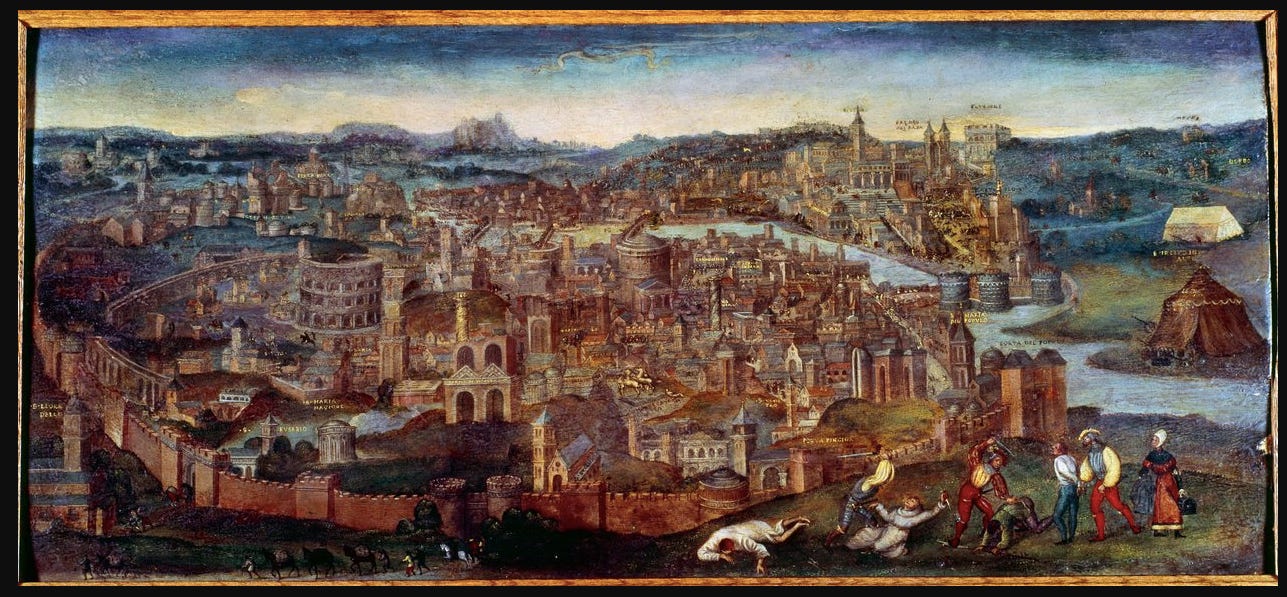
Let me tell you about a weird guy I found recently.
Teseo Ambrogio degli Albonesi (1469—1540) was an Italian humanist who studied in in Pavia, abandoning a legal career to become a priest in the Augustinian order. Around 1515, in Rome, he was put in touch with a group of Lebanese priests and tasked with investigating the Catholic orthodoxy of the Maronites, a job he was well-suited for given his proficiency for languages—some accounts have him speaking as many as eighteen different tongues. He didn’t speak Syriac but he picked it up quickly thanks to his prior knowledge of Hebrew, which he’d learned from tutors in Rome’s Jewish community, including the son of Pope Julius II’s personal doctor.
He also had extensive contact with the monks of Rome’s Ethiopian community, and learned their language as well.
Eventually he left Rome for Pavia, working towards publishing a translation of the Chaldean Psalter he’d brought with him. It was laborious, painstaking work. More than just writing the book, he had to design and create multiple new typefaces. His work was interrupted by the Sack of Pavia in October 1527, which left 15,000 dead—a real massacre, but overshadowed in history by the much bigger Sack of Rome in May of that year, which left maybe 45,000 dead. Teseo either fled to Ravenna or happened to be out of town when the sack happened. He was lucky to be alive, but he’d lost the manuscript he was working on, his life’s work.
For a time, he gave up on his scholarship and focused on his priestly duties. He must have felt despair. All that work, gone.
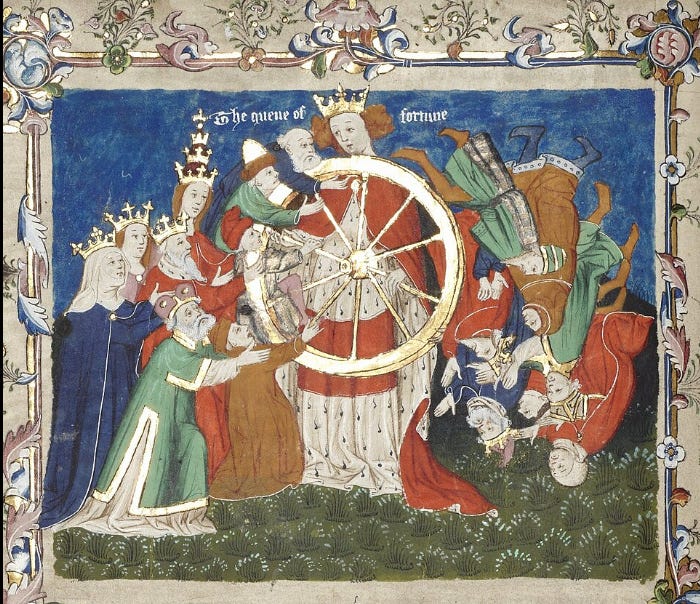
In 1534 he was in the city of Ferrara, visiting his uncle Afranio and giving lessons on oriental languages, including Armenian, which he had recently picked up. One day he was at a butcher’s shop and noticed that the paper his meat was wrapped in was from his old manuscript! What luck! He must have felt Fortune’s hand spinning her wheel in his favour. With financial help from his uncle, he was able to reestablish his printing press, though a promotion forced him to relocate once more to Pavia.
His book, which he dedicated to his uncle, had the rather long title Introductio in Chaldaicam linguam, Syriacam, atque Armenicam et decem alias linguas. Characterum differentium Alphabeta circiter quadraginta et eorundem invicem conformatio. Mystica et cabalistica quamplurima scitu digna. Et descriptio et simulachrum Phagoti Afranii. Theseo Ambrosio ex Comitibus Albonesii I. V. Doct. Papien. Canonico Regulari Lateranensi ac Sancti Petri in Cælo Aureo Papiæ Præposito Auctore1. The book was among the first western studies of these languages, but it was also kind of a disorganized mess. It contains some of the first reproductions of the various alphabets he was studying, but it also has some alphabets that are just completely made up, that he sourced from cabalistic and magical writings (he claims to have the alphabet of the devil and of the angel Raphael). But the really funny part, to me, is that the book is mostly remembered today by music historians for a long digression which describes a musical instrument called a phagotus, which was invented by his uncle. Evidently it was a sort of early bagpipe.
I’ll be back this weekend with a post summing up what I’ve found in the Epstein files, focusing on Canadian connections. I have found a few small but interesting things I haven’t seen reported elsewhere yet, but I feel like there’s a bit more to the thread and I want to give myself a few more days to see if I can tease the out.
BTW, if you liked this post, check out Tinney Sue Heath’s Medieval Italian People. I got the idea for this from the biographies she writes, which I always look forward to.
More from Adam’s Notes:
Introduction to the Chaldean, Syriac, and Armenian languages, and ten other languages. About forty different alphabets of characters and their mutual conformation. Mystical and cabalistic matters, very much worth knowing. And a description and a simulacrum of the Phagotus of Afranius. Theseus Ambrosius, from the Counts of Albones, I. V. Doct. Papien. Canon Regular of the Lateran and of Saint Peter in the Golden Sky, Prefect of Papias, Author
Fascinating biography, and perfectly illustrated by the Wheel of Fortune. Also, thanks for the mention of my Substack.
Etymologically, I'm guessing "Phagotus" must have led to "fagotto"/"fagott", the Italian/French words for "bassoon". Can only imagine how awful that thing woulda sounded...