
Adam Threeze's Chartbook
Party racism/biometrics/El Cid/17-century shorthand/elite overproduction in the renaissance

About Me | Instagram | Goodreads | Letterboxd
Trying something new here, in the manner of Adam Tooze’s Chartbook. For the next month or so I’m going to try to putting out shorter posts with links to interesting stuff I’ve been reading or thinking about.
This was one of my original plans for Adam’s Notes, but I talked myself out of doing because when I launched there were a lot of other people doing similar stuff but in a very inferior way. So, yes, it’s another content aggregator, but it’s justifiable given my superior taste and wide-ranging interests. The goal is to put these out on monday mornings, and then maybe also throughout the week depending on my time/inclination. The subject matter will be eclectic, but probably focusing on history, culture, news, and art.
Let’s go.
Found this bit of racism against British partiers to be genuinely shocking:
In 2005, the Metropolitan Police introduced Form 696, a blatantly racist bit of paperwork demanding that promoters list the genres to be played at parties, along with the ethnicity of performers and attendees. Form 696 wasn’t scrapped until 2017, depriving an entire generation of MCs of the chance to perform to club audiences.
From Too Big to Shut Down a review of a history of British dance music, by the same author who did the recent Britney Spears profile in the LRB.
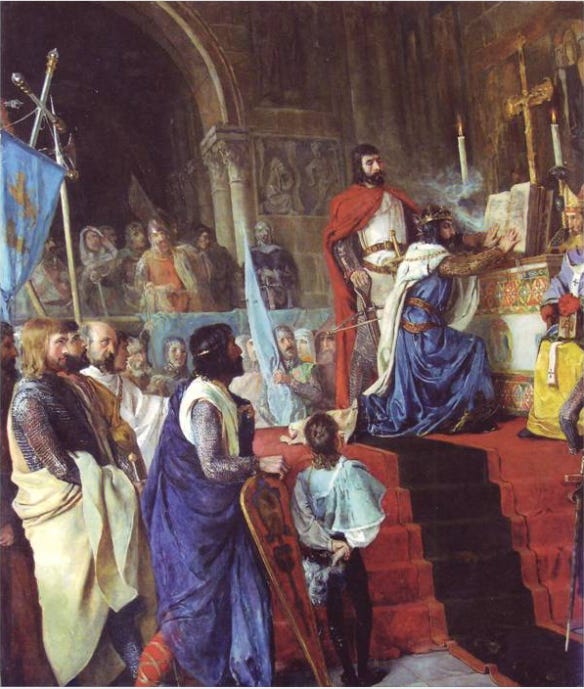
Also in the LRB, the Spanish myth of El Cid:
In the 21st century, El Cid’s image has been taken up by Spain’s far-right party Vox, which has rallied beneath his statues. He has become the medieval precursor of supremacist ideologies: a warrior against Muslims, immigrants and secessionist movements.
His deification is paradoxical, Nora Berend argues, for what we know of the historical Rodrigo Díaz suggests the opposite: he was scarcely motivated by religion at all, or by patriotism. Exiled by King Alfonso VI of León and Castile in 1081, Rodrigo turned up at the Muslim court of Zaragoza and offered his services to the ruler al-Muqtadir as a mercenary commander, selling the arts of war in exchange for pay, in a chapter of the Cid’s life excluded from the Poema. It is likely that the knight, in his lifetime, killed many more Christians than Muslims…. In the Poema, the hero’s closest friends are Muslim.
Source: Gallop, Gallop
I’ve never been much of a fan of El Cid, but readers know that Orlando and the chansons de geste are very important to me, and I think there’s a case to be made for reclaiming these myths from the right, though as the article shows, the left hasn’t done a very good job of it.
How I Accidentally Sparked the Pepys ‘Cancellation’ Furore
The castigation of Hinchingbrooke School has been reductive, oversimplifying an immensely complex subject. It has taken me decades to reach the necessary proficiency to explore Pepys properly and even now I feel I have only just opened the door. I have been learning and using Pepys’s shorthand system for over 20 years and am now one of a tiny number of people capable of reading the original diary. I only know of one other. I have the entire manuscript in digital form on my computer.
The original transcriptions I produced from the diary for publication make me only the fifth person in two centuries to do so, but with the ability to zoom in on the text and digitally enhance it I had a huge advantage. This helped me to identify errors in the definitive 1970s edition and produce corrected transcriptions of the most controversial passages.
Source: https://dailysceptic.org/2026/01/22/how-i-accidentally-sparked-the-pepys-cancellation-furore/
Context: a British school recently removed Pepys from its name.
I think the brouhaha is a bit overdone (the Pepys messageboard I lurk will not shut up about this, and of course way too much gets boiled down to ‘wokeness’). But the piece above is interesting because the author is one of the few people who’s taken the time to learn Pepys’s shorthand.
Makes a good point that by leaving Pepys’s sexual escapades/aggressions ‘untranslated’ they tend to come off as whimsical, even when they definitely aren’t. On the other hand, I don’t think it takes a polyglot to figure out, say, this bit from 1667: “je had Mrs. Burrows all sola a my closet, and did there ‘baiser and toucher ses mamelles much as yo quisere hasta a hazer me hazer, but ella would not suffer that yo should poner mi mano abaxo ses jupes, which yo endeavoured.”
Elite overproduction in the Renaissance
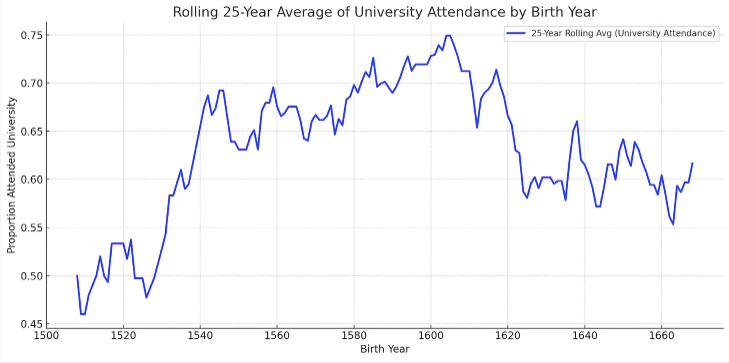

Fascinating piece from Julianne Werlin’s Life and Letters. Looks at the idea of elite overproduction in the English renaissance, breaks down the numbers, makes a comparison with our own times, and all without falling into reactionary nonsense. I think this is what a lot of Substack aspires to and very rarely achieves.

Biometric gated communities: from counterinsurgency to a community near you, coming soon. Made me think the scenes of queues at security turnstiles in Michel Franco’s New Order. Every evil that’s visited on the Palestinians is going to be visited on the rest of us, if not to the same intensity, but inevitably, as we’re seeing in Minneapolis and elsewhere.
Thanks for reading to the end. Please let me know if you like this format and if you think I should keep at it.
More from Adam’s Notes:
I read Pepys with great interest as an English major decades ago. The sex bits seemed not to be outlandish. Would love it if you could do a longer piece with translations of his “code” into modern English. I remember being able to guess what he was saying but the prurient me would like like more precise detail! 😀
Definitely enjoy the format, as long as you provide some commentary on what you enjoyed or found interesting about the piece. Always like seeing what others find thought-provoking, but a bit less helpful without knowing what those thoughts are.